
I’m getting used to boxes appearing at the door on a daily basis. I can usually hear the delivery truck door opening and closing, my office overlooks the driveway. Usually it’s just a knock and they drive off. I especially love it when I’m in the middle of a Microsoft Teams meeting and the single knock is followed by a series of insistent doorbell dings. That means the courier is standing at the door waiting to for me to fork over my credit card for Troy’s brokerage fees and duties. Thankfully, of late, I’m opening the door to this white box.

Princess Auto, if you’re American, is similar to your Harbor Freight. It’s a Canadian chain of stores that originated in Winnipeg, Manitoba. It began as an auto wrecking business and expanded into retailing war surplus items, then eventually, tools and equipment (thank you Wikipedia). When I first heard another RV-14A builder, Jim S., call this store “Princess Aerospace”, the name just stuck with me. Like with any project, never skimp out on the tools required for precision work, but for everything else, Princess Aerospace is apparently good enough. I personally enjoy walking down the tool aisles in the front of the store.
I thought I’d talk about the different metal working tools in future entries as I learn about the stages of Troy’s builds. From day zero, I was curious about what kind of instructions came with this flat box of bits. There had been a schematic diagram taped to the garage early on and when I posted a picture of this on Facebook, my funny friends joked that those were the instructions – IKEA style. There’s actually a giant binder, the pages all printed on 11 x 17” sheets of paper, double sided. In this empennage kit, the first 5 chapters are inventory checks and “how to” details; chapters 6 through 12 relate to the actual build; each chapter contains anywhere from 10 to 40 pages.

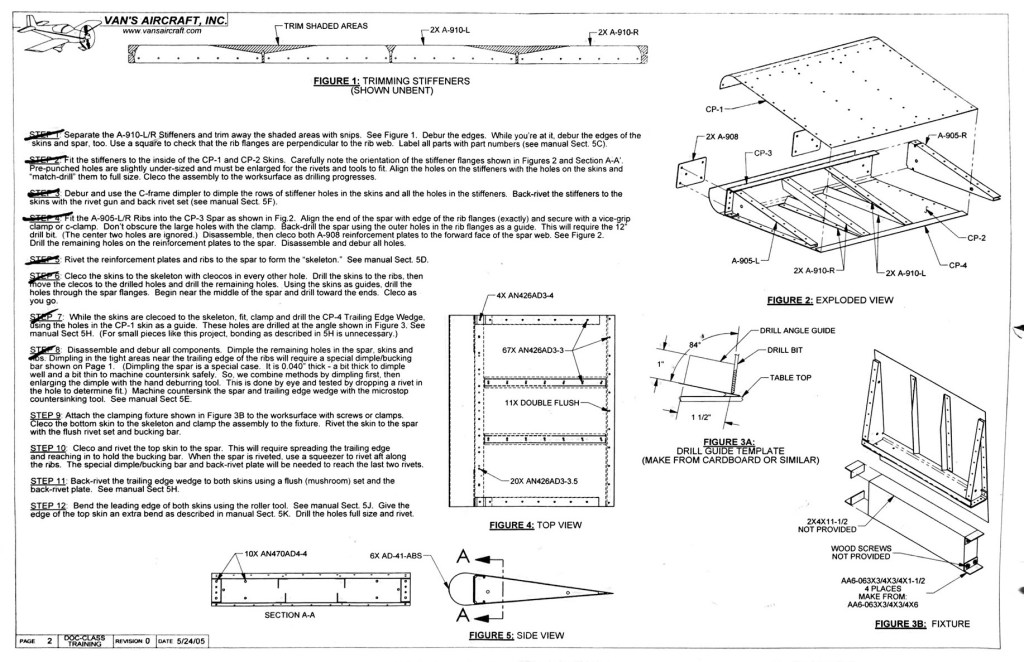
“It’s sort of like the technical challenges in the Great British Bake Off, you’re given a list of the ingredients and told ‘now make a soufflé’ .”
Troy
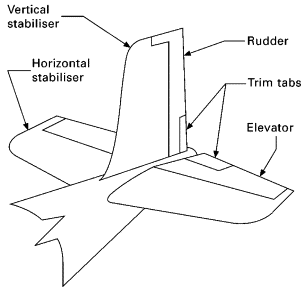
The internet actually does a fantastic job of explaining the parts of an airplane. The empennage, which is what Troy is working on, consists of a vertical stabiliser which has a rudder connected to it; the horizontal stabiliser, which has the elevators connected to it.
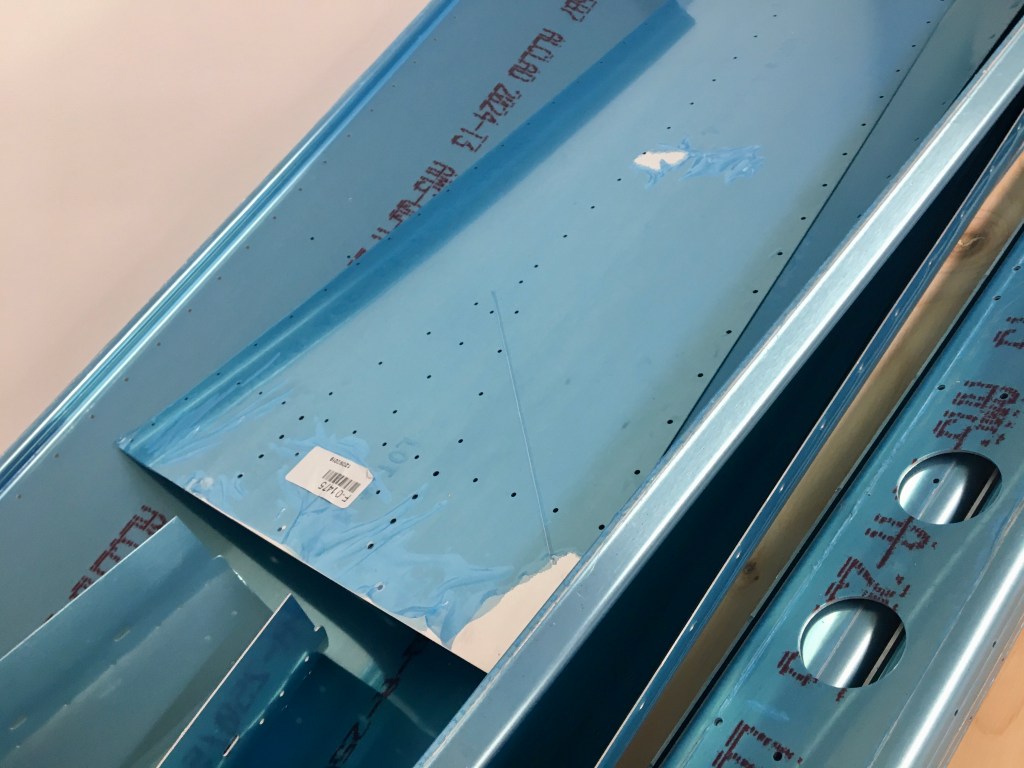
The deconstructed individual components are relatively simple when I surveyed all the metal bits strewn across our garage floor – there are ribs, like our rib cage, there are spars, which would essentially be like our spinal column, and the skin, well, exactly that, the aluminum skin. The body of an airplane is just that – connecting the spars and ribs to the skin. Although the individual pieces of sheet metal have been cut to shape, the real work is in preparing the aluminum skin: holes need to be drilled, deburred, countersunk or dimpled, then rivetted. Oh the rivets… I can’t wait for that part.

 From The Right Seat