
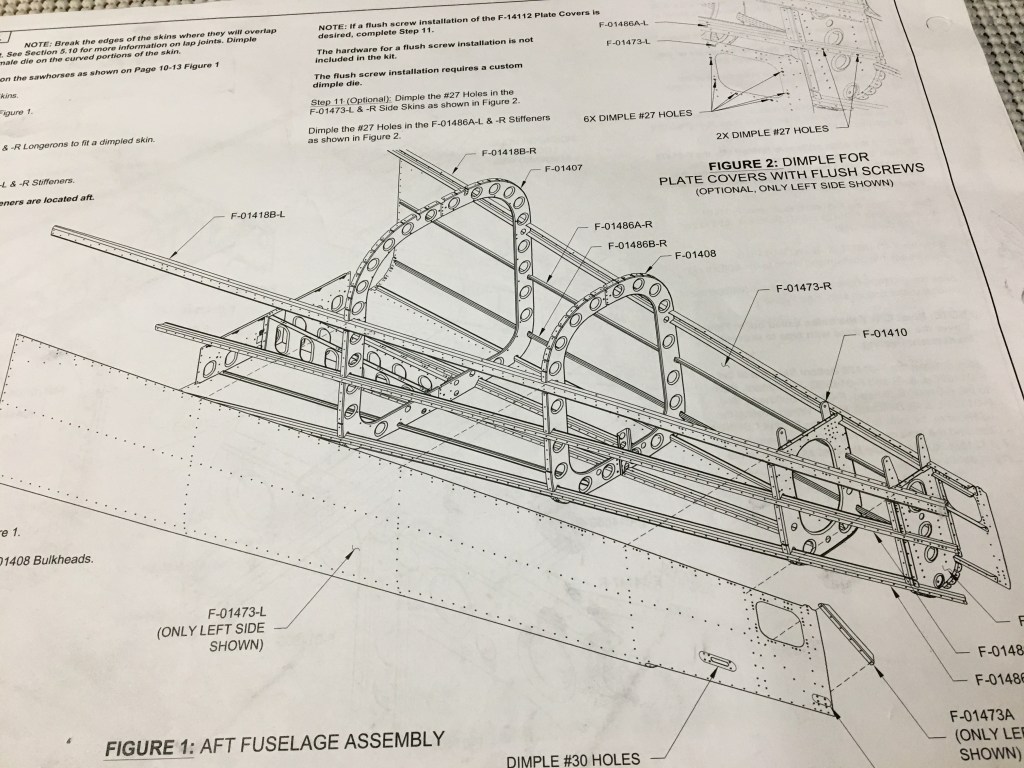
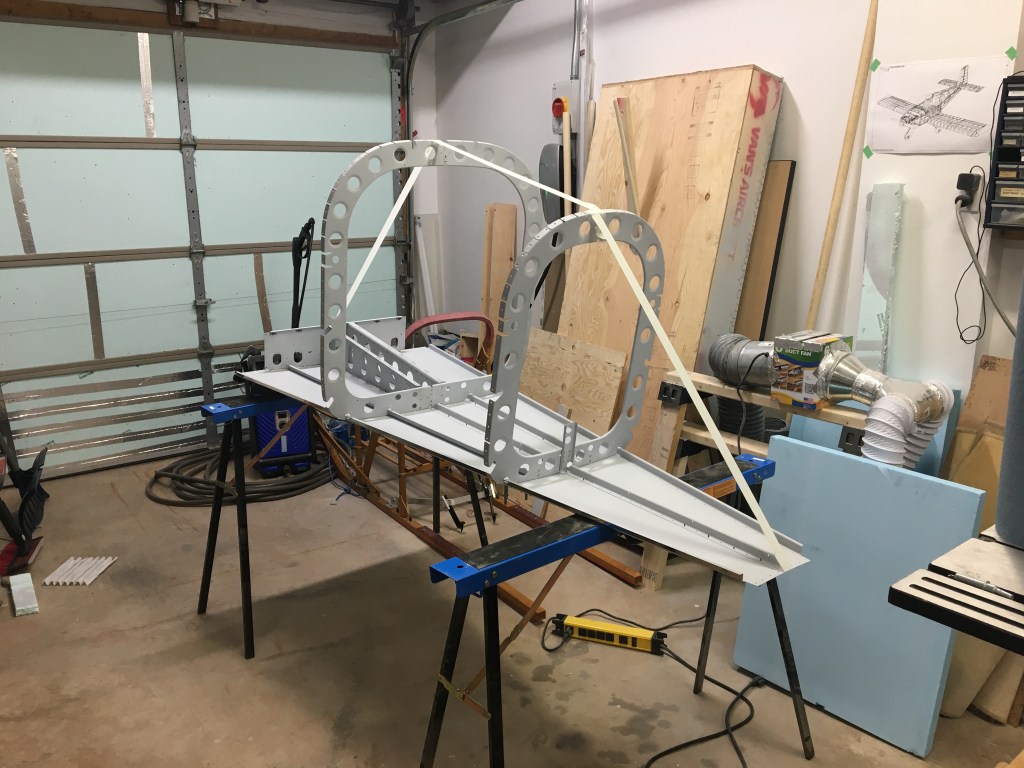
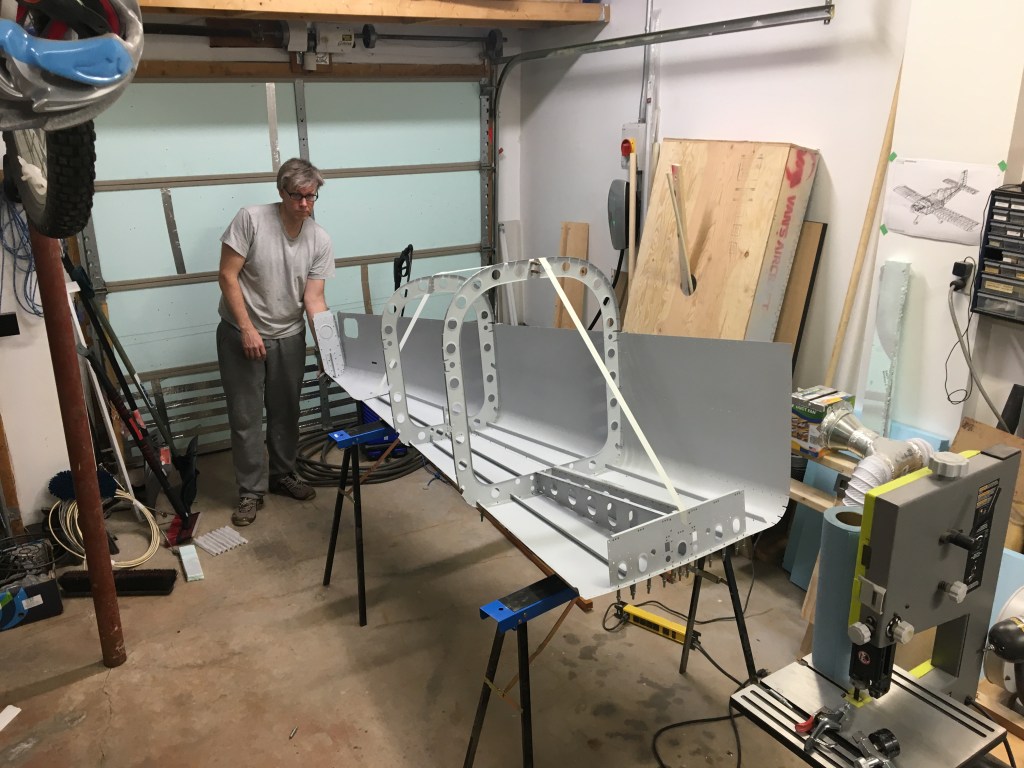
Today marks a couple of noteworthy dates – the 2021 Iditarod sled dog race begins today and today is also the 1-year anniversary of a flight Troy and I did to transport a special dog. The current section of the airplane that Troy is working on is technically where dogs would sit if we were to fly with some four-legged friends in the RV14-A. We’ve had the pleasure of taking a couple of dogs in the air with us in the Piper Cherokee – our own older female, Piper (named for the aircraft of course), and Sweetie (now known as Sandy). I actually came across an article earlier this week in Aviation Week which inspired today’s blog entry. This photo essay by Kimberly Henneman showcases the important role that airplanes and volunteer pilots play to support the running of the Iditarod race, a really insightful series of images worth sharing.
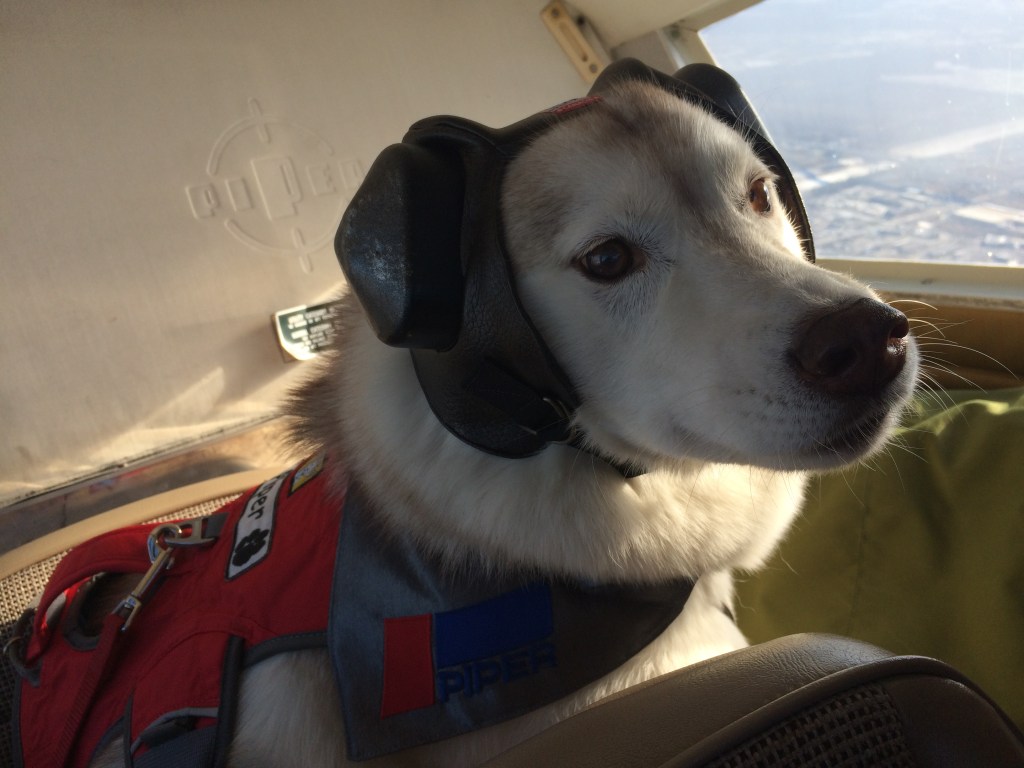
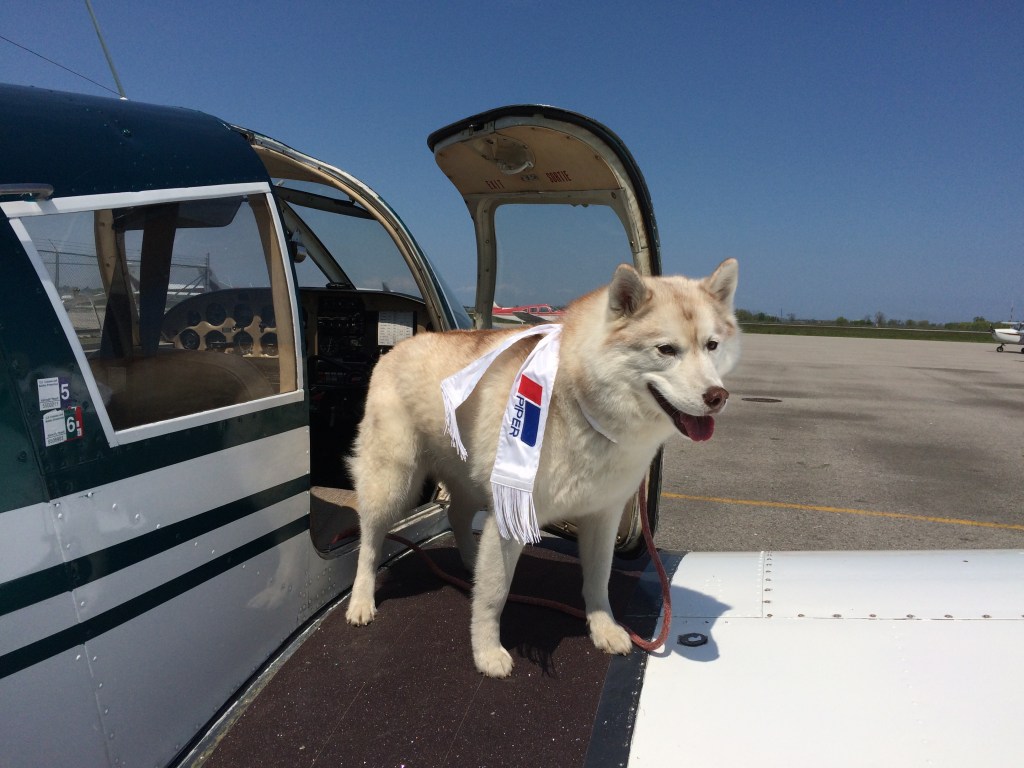
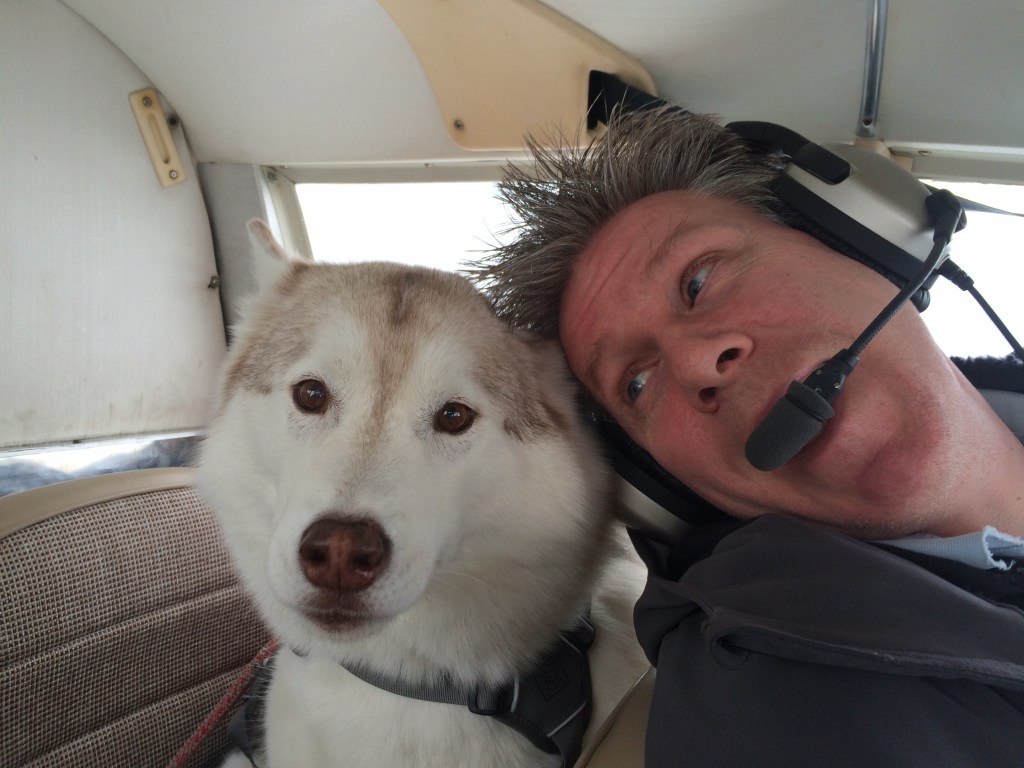
Sandy’s flight on March 7th, 2020, was a special one for us. We had connected two good friends together to match a dog with a forever home, but transport had been a problem during the winter months. The journey connecting Ontario to Pennsylvania by car was proving difficult with timing and weather – and that’s when Troy flew in. While many pets are moving across the border daily (with more fluidity prior to the pandemic) we wanted to make sure we did it legally and compliantly. Sandy’s flight took a bit of planning because we were crossing the US / Canada border with an animal and leaving the animal in the US. All domestic pets entering the United States are required to show proof of valid rabies vaccination. With Sandy staying in the US, she was technically being imported and was required to follow state import guidelines – Pennsylvania requires a Certified Veterinary Inspection (CVI). In Canada, this document is a form from the Canadian Food Inspection Agency (CFIA) that has to be completed by a veterinarian and then signed off by the CFIA.
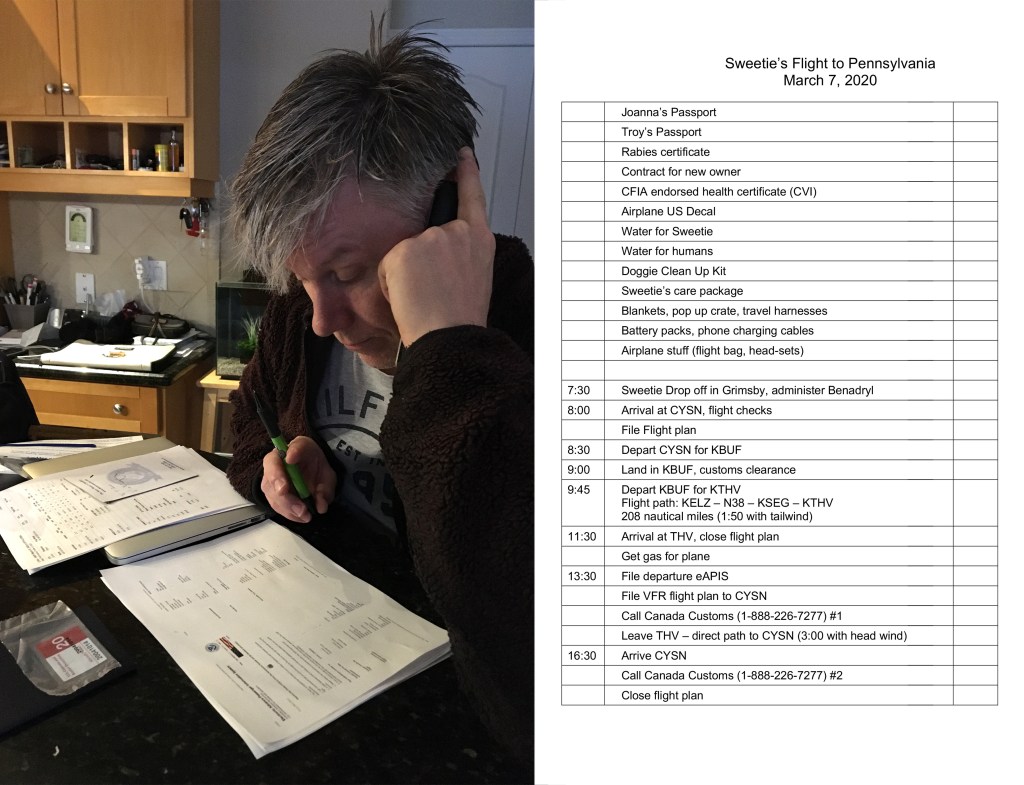
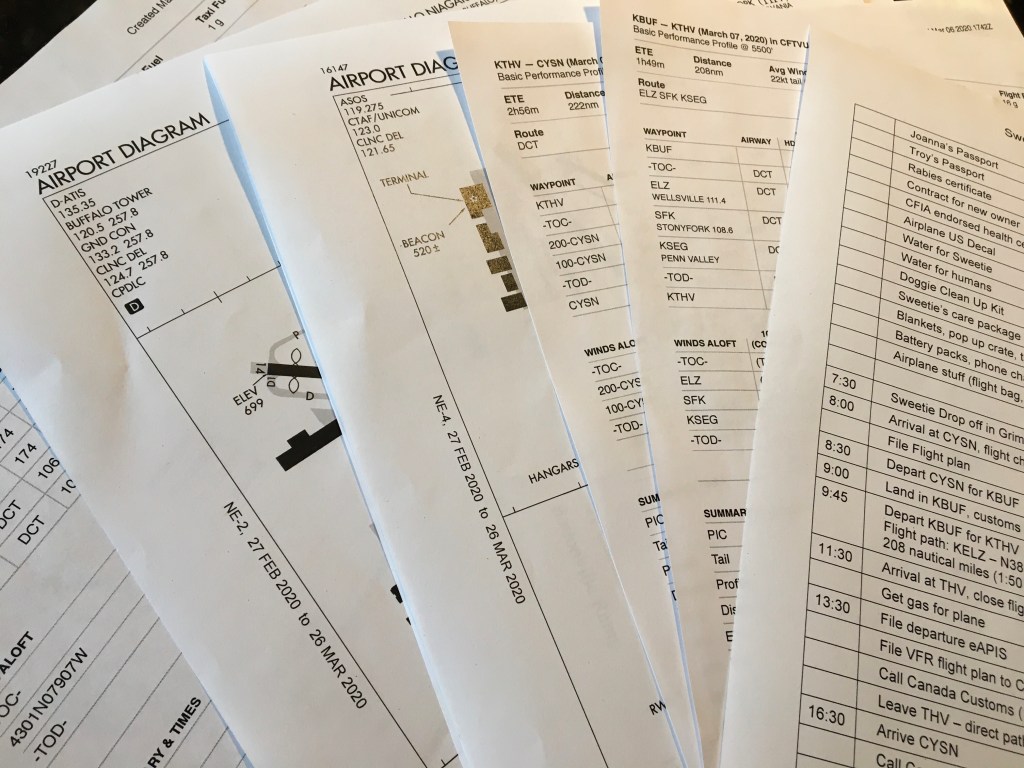
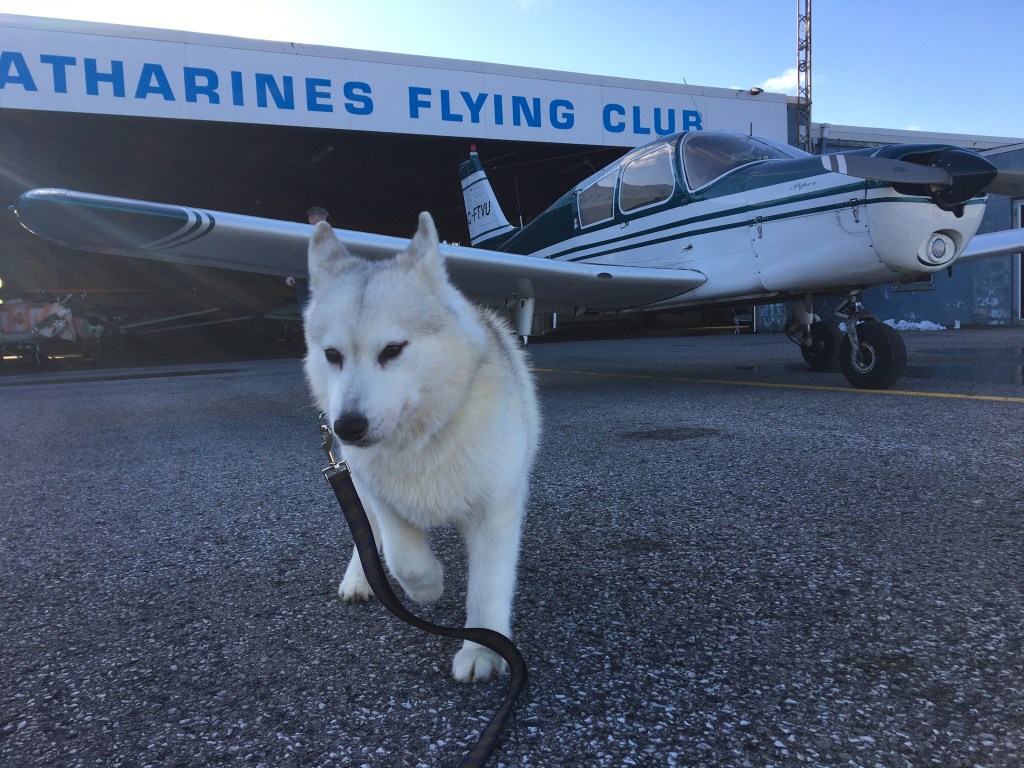
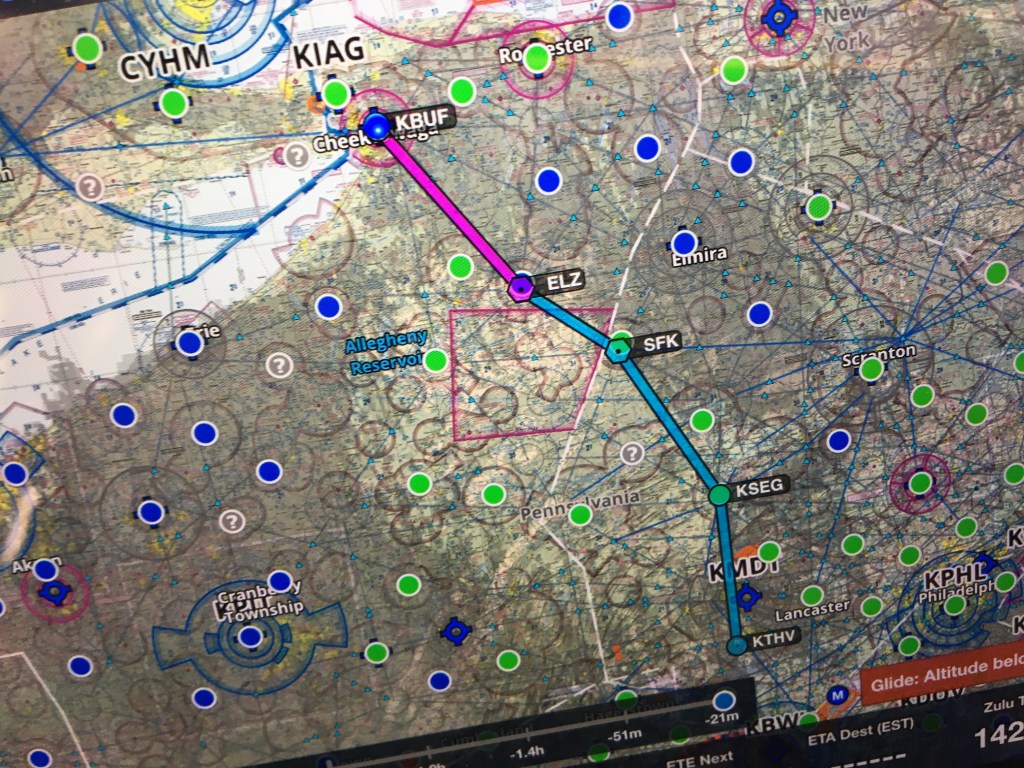
With all of Sandy’s paperwork in hand, flying logistics and weather became the next challenge. Based on the weather window – March 7th was our targeted fly date. When flying to the US, you must land and clear customs at an available port of entry – from St. Catharines (CYSN), this is Buffalo International Airport (KBUF). It’s pretty daunting to enter airspace that is being shared with jumbo jet airlines. From KBUF, we would then be flying directly to our destination of York Airport (KTHV), a journey that would take approximately 2 hours (a bit faster than the 7 hour drive).
I remember Troy spending an hour on the phone with flight services discussing the incoming weather on the flight path we had planned. There were some icing conditions along the route that were causing some concerns. In-flight icing is one of the greatest dangers of cold weather flying because it causes airflow disruption that decreases the aircraft’s control and performance. Once we landed in Buffalo and cleared customs, it became a little bit of a waiting game to watch what the weather would do. The decision to fly or not to fly is a crucial conversation with all parties involved when evaluating safety, weather, flight risks and most importantly, pilot comfort. There is no shame in choosing not to fly, and I’ll save that particular story for another blog entry. Sandy was a hit at Prior Aviation as we waited out the weather, she charmed the staff, instructors, and customs officials. When those blue dots on the map began to change to green, we were airborne again.
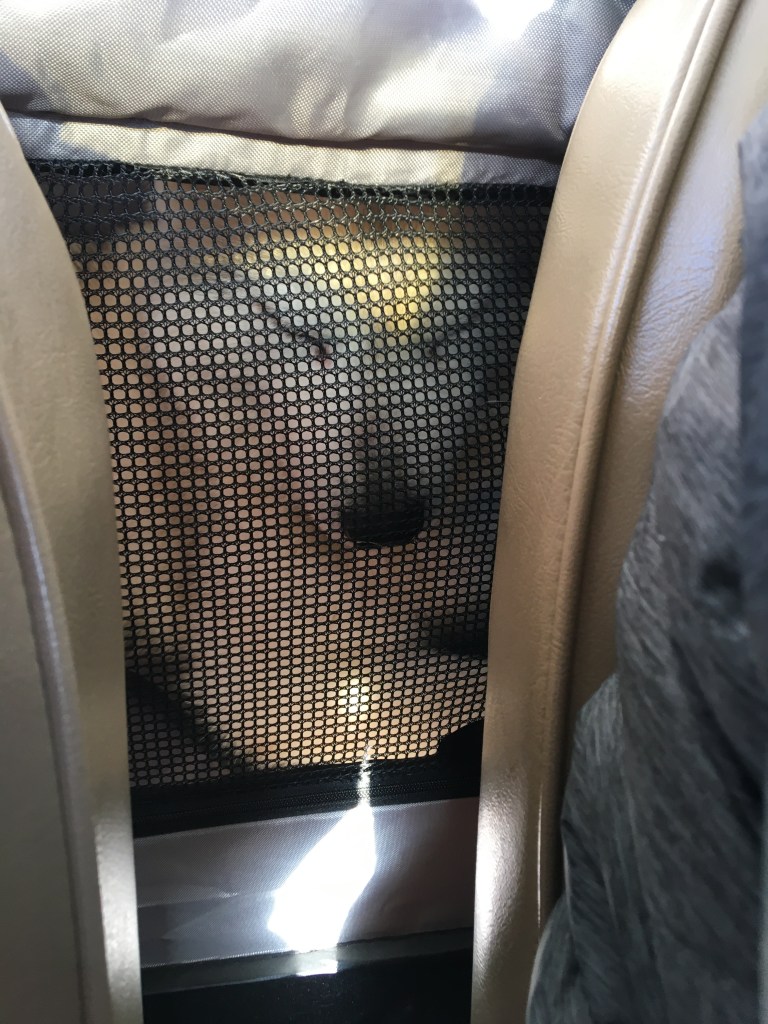
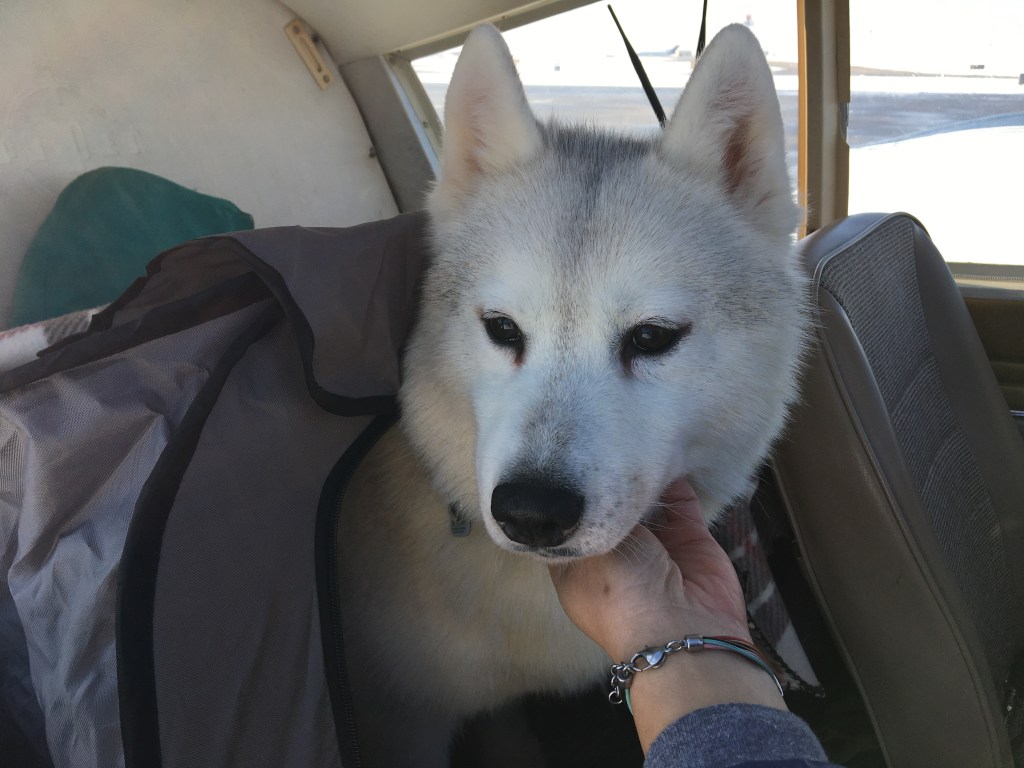
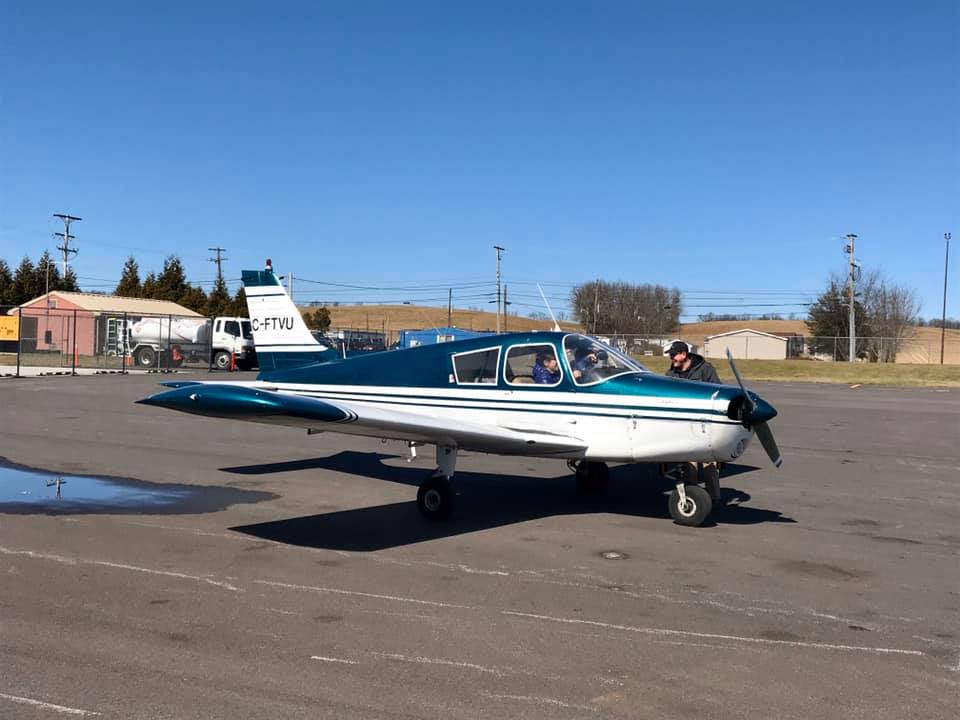

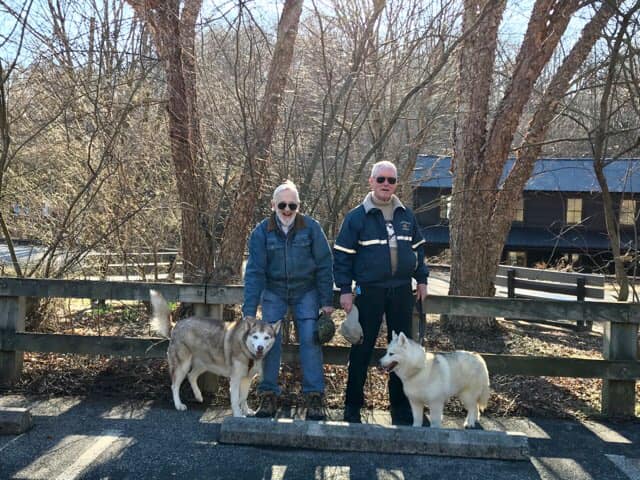
This particular flight will always be a treasured moment for Troy and I. While flying itself is a privilege and a joy, to be able to connect friends together through flight etches the memory in your heart. Looking back on this flight, we didn’t realize just how important this date would be. It was only a week later that the world shut down, the borders became closed, and we would be in lockdown throughout 2020. How blessed we were to have flown one year ago today. As things seemingly begin to “nose up” as the vaccines continue to roll out, I can only begin to wonder about the future adventures we might have with the RV14-A when it is completed – however, that’s a bit a ways away. Troy has at least another 1200 hrs of work ahead.
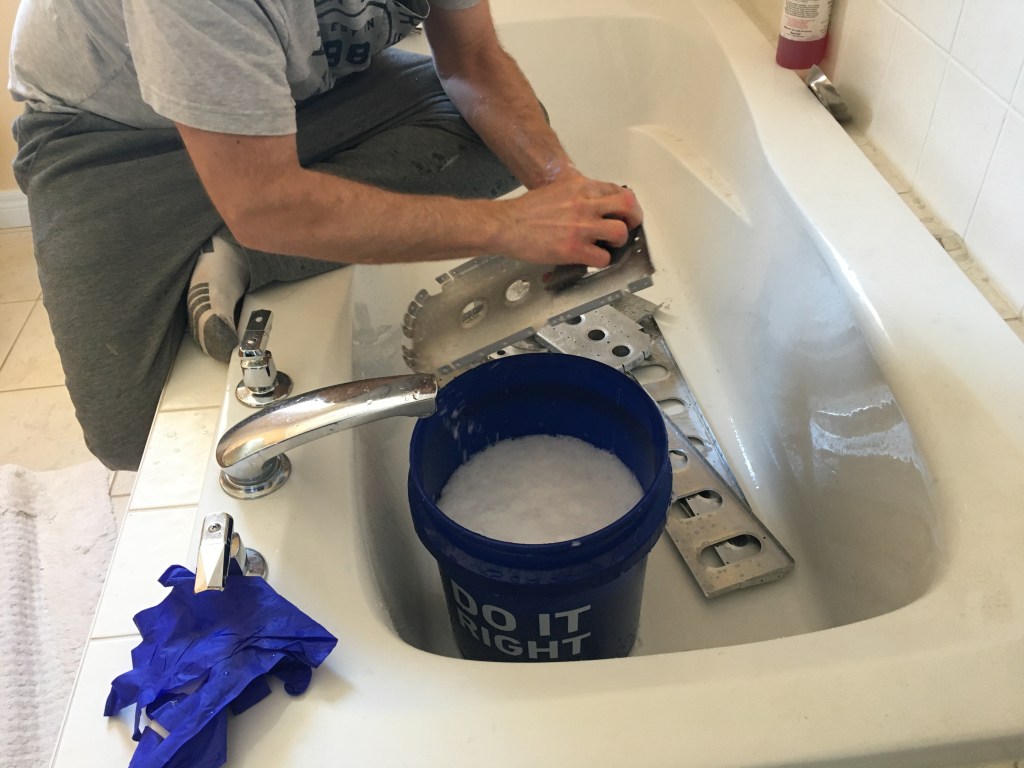
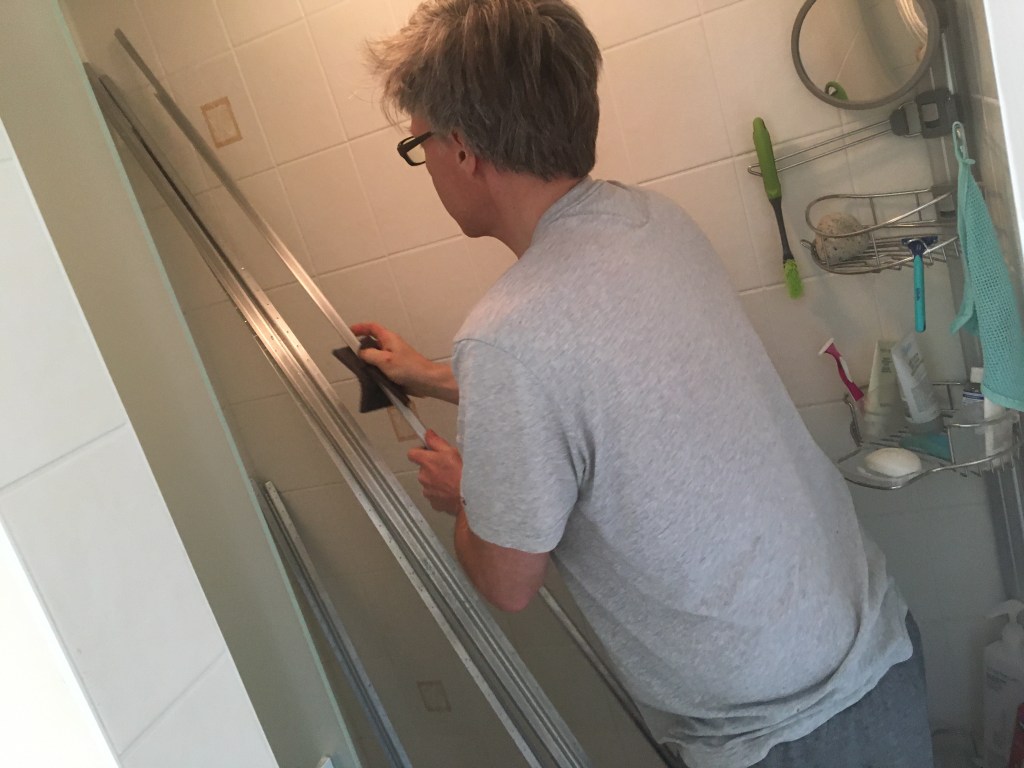
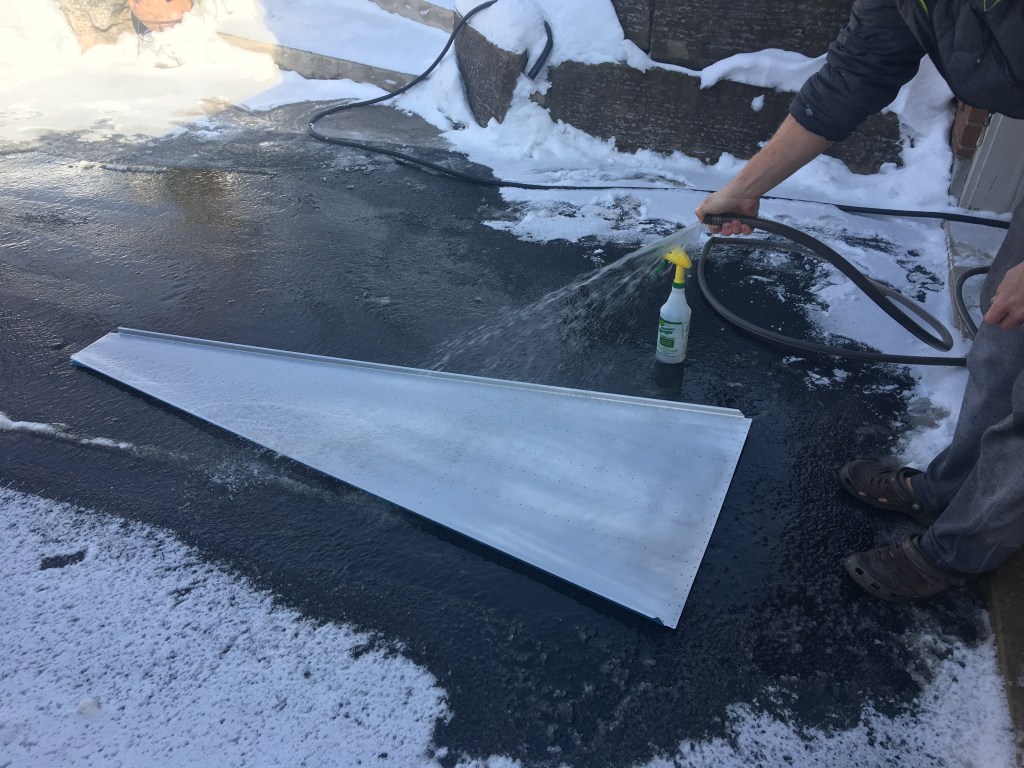
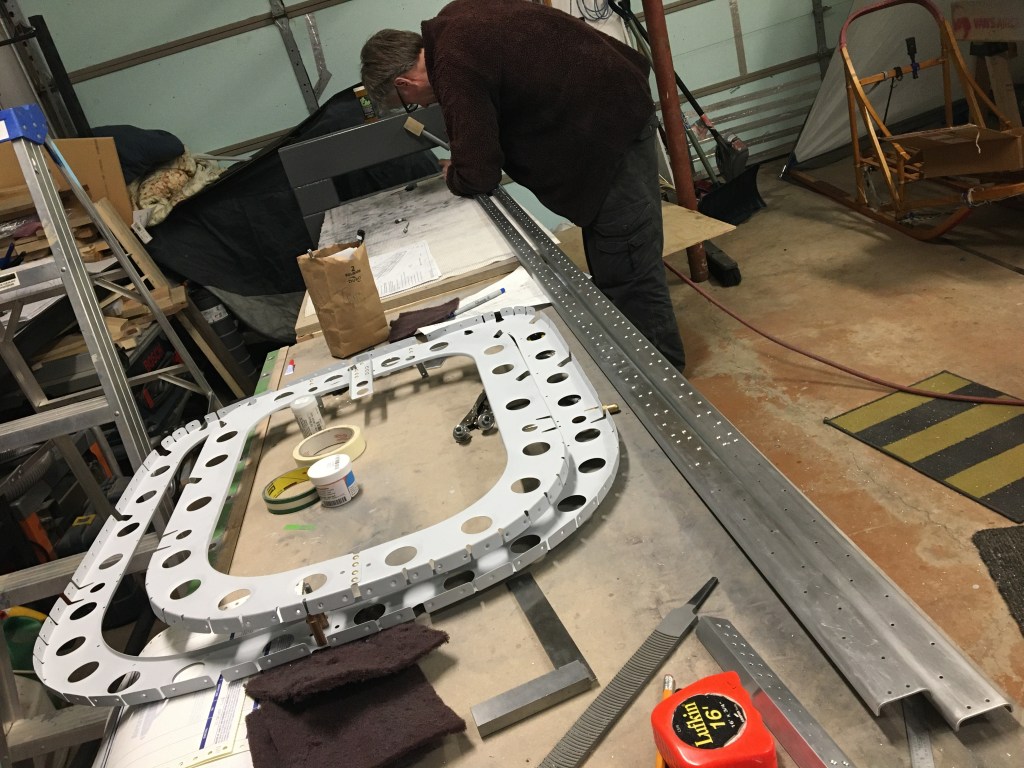
The fuselage of the empennage is coming along nicely… and it’s HUGE. This really puts into perspective just how big this airplane really will be when you mentally start assembling the other completed components and quickly realize the garage is too small. More to come!


 From The Right Seat