
It’s been about a month now since the 240 pound crate from Oregon arrived. Troy will often shout to no one in particular, “I’m just going to be out in the garage for a few minutes” and about 3 hours will elapse. You can see he TOTALLY has it easy in this marriage. It isn’t until the following morning when I’m taking some recycling out into the garage that I realize he’s plowed quite far along. This is typically followed by me yelling, “You didn’t let me photograph any of that!” I ended up propping myself up on a stool beside his work bench yesterday to try and figure out how I’m going to catch up on blogging his progress. As I sat there, I looked around the garage and asked, “Where’s the beer fridge?” I’ll get back to that question.


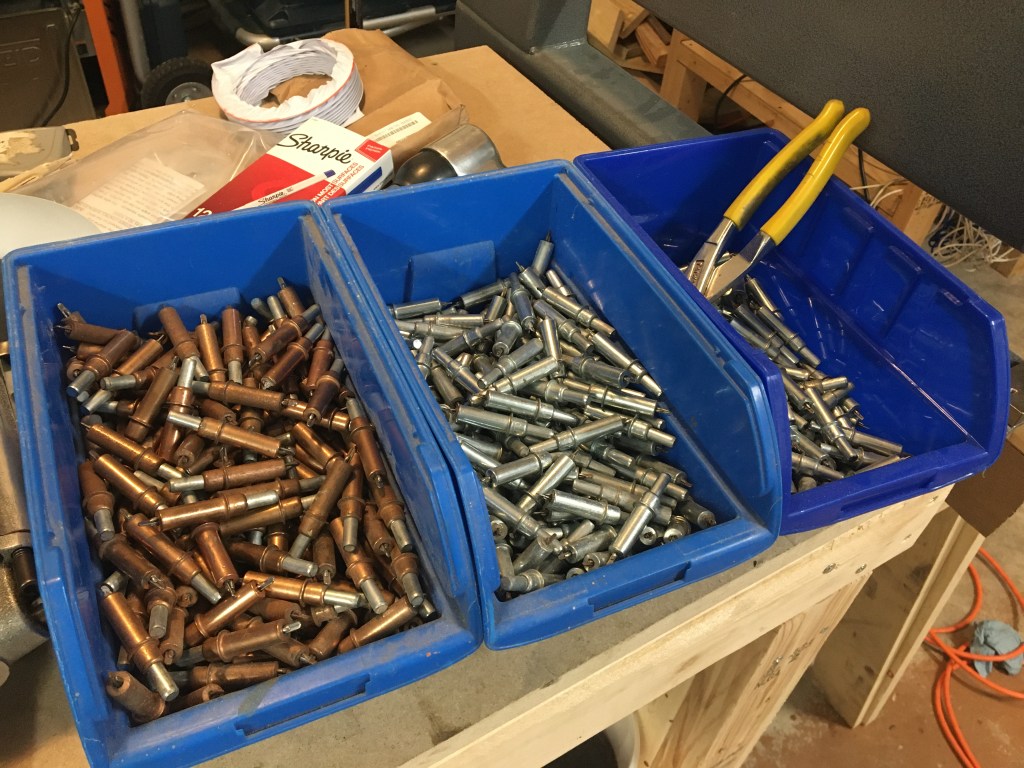
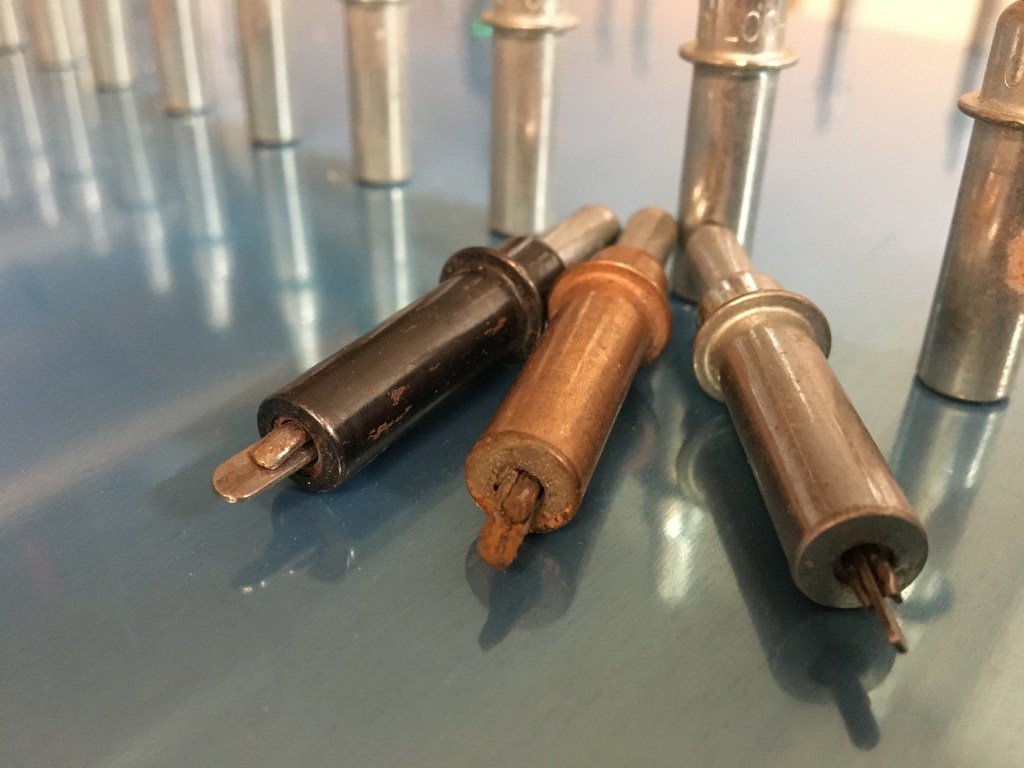
What I quickly realized, when I surveyed all the bits and pieces of airplane laying around – for this particular kit build – an airplane builder is really just a sheet metal worker. You are literally, predominantly and ultimately connecting pieces of metal together permanently with rivets, and temporarily with Clecos. Cleco clamps are to the builder what dressmaker pins are to a seamstress – and there are buckets of different sized ones everywhere. After helping Troy place and remove many Clecos yesterday, I’ve begun to wonder what else I can Cleco around the house.
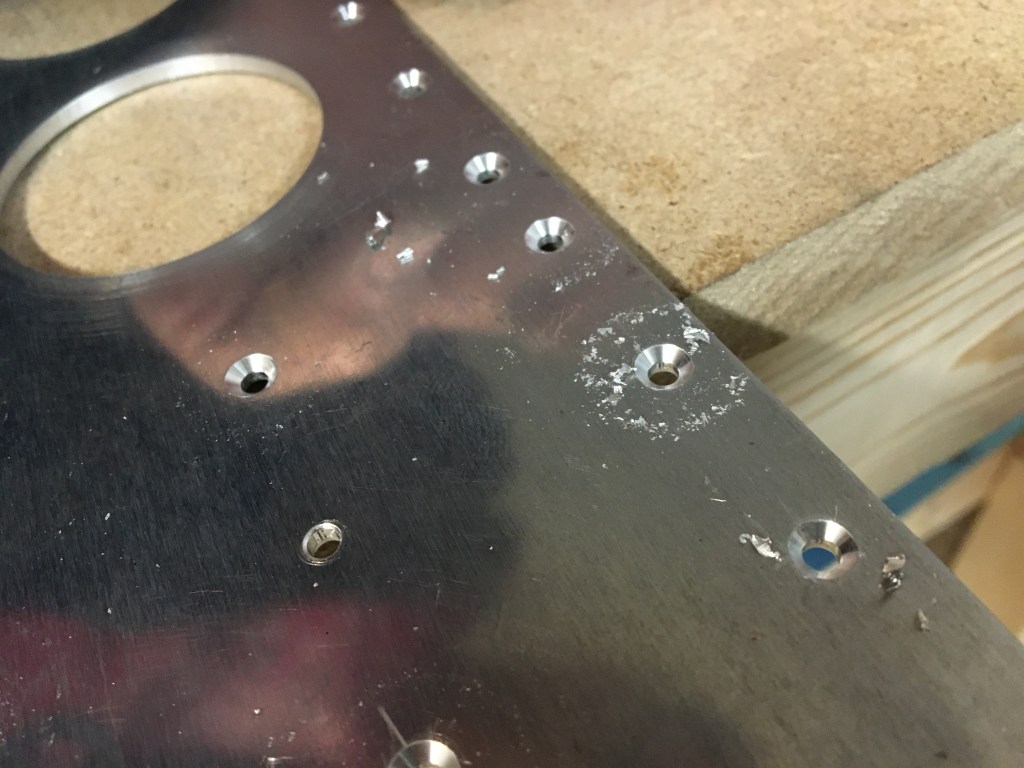
There was a lot of prep work on the various parts before assembly could even begin. The past month was probably doing just this, the prep work. While the pieces did come pre-drilled, many of the holes are undersized and required further drilling, and subsequent deburring. Deburring removes all of the sharp metal edges, which are a potential crack forming point, a big no no in airplanes.
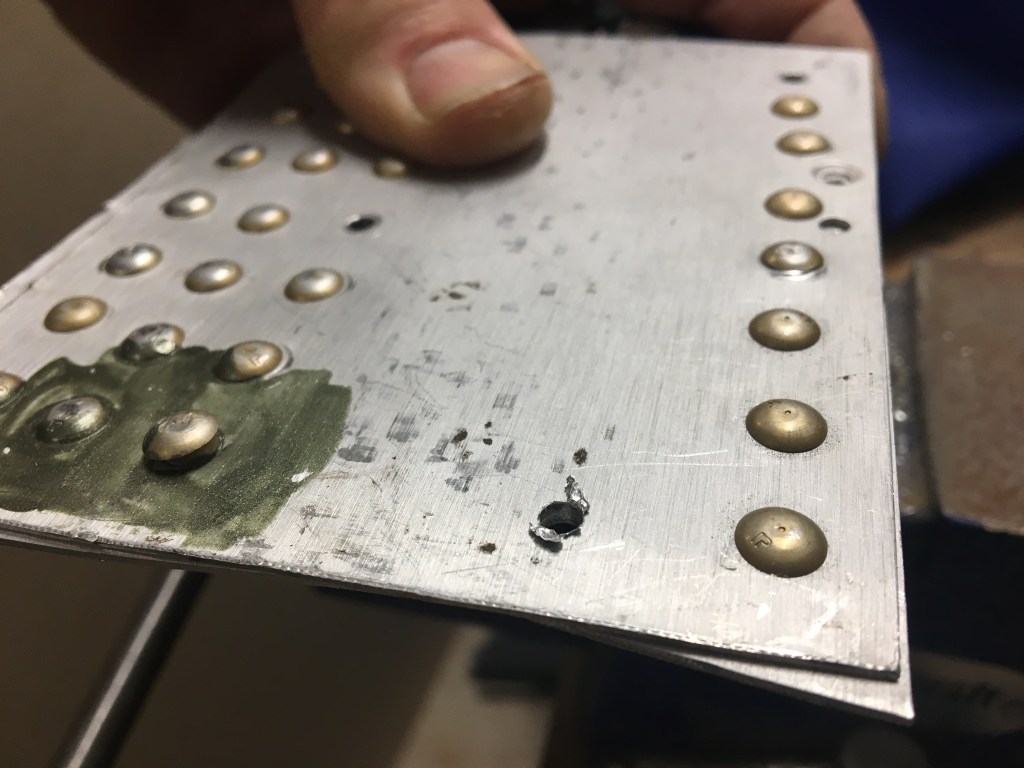
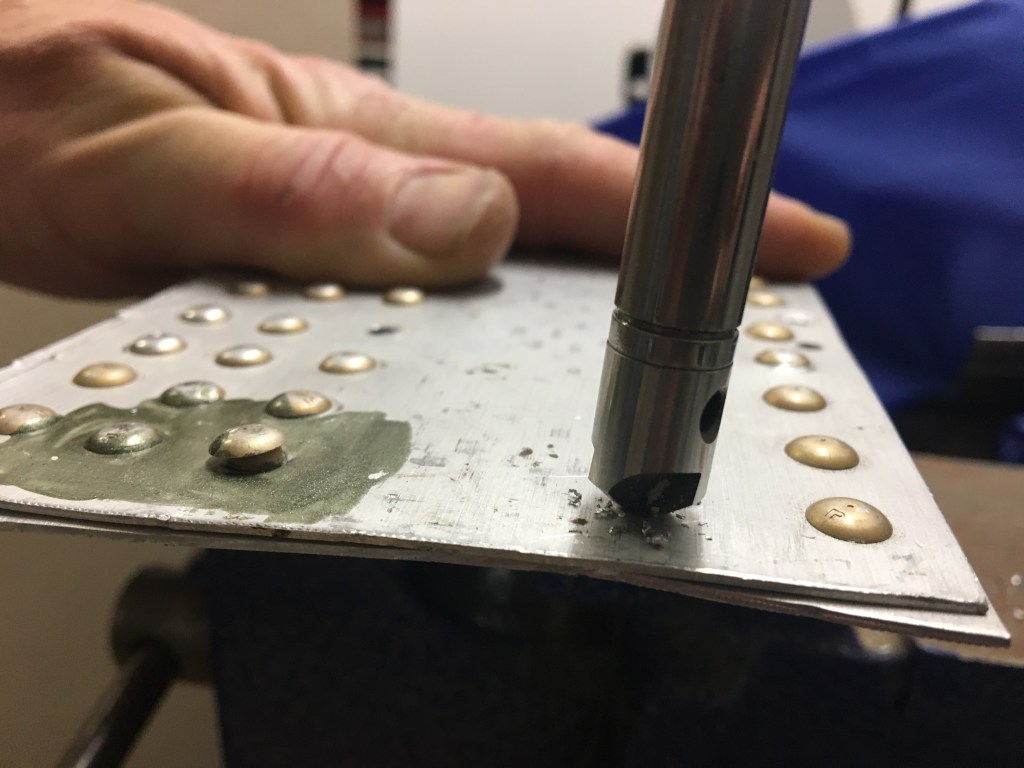

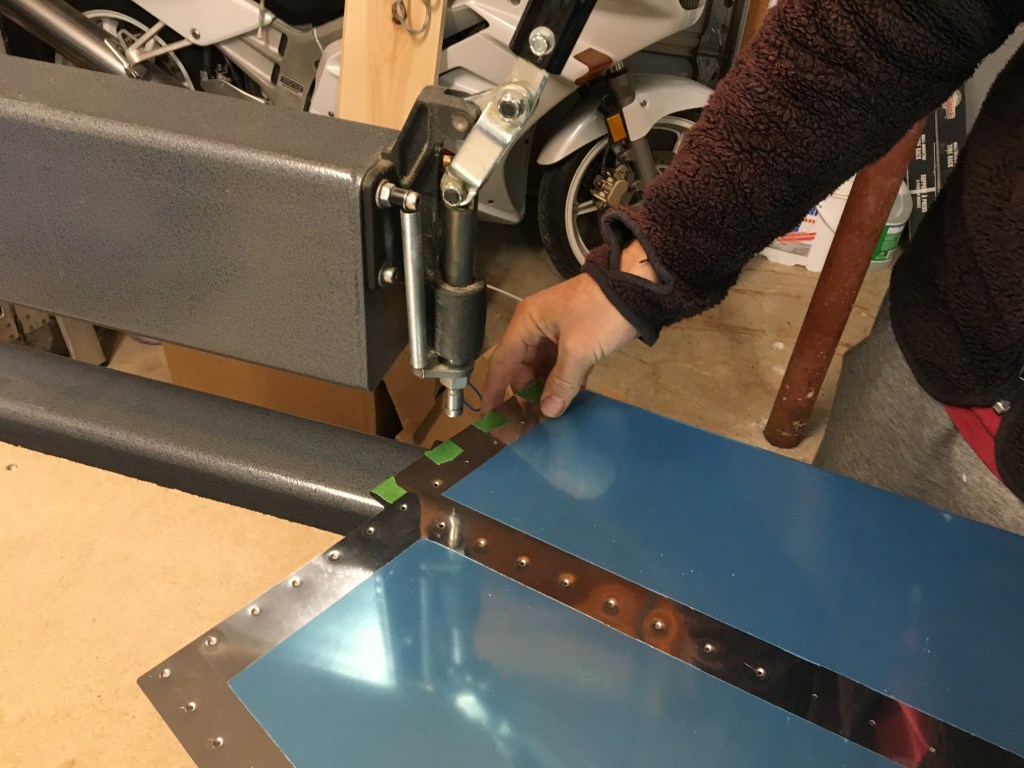
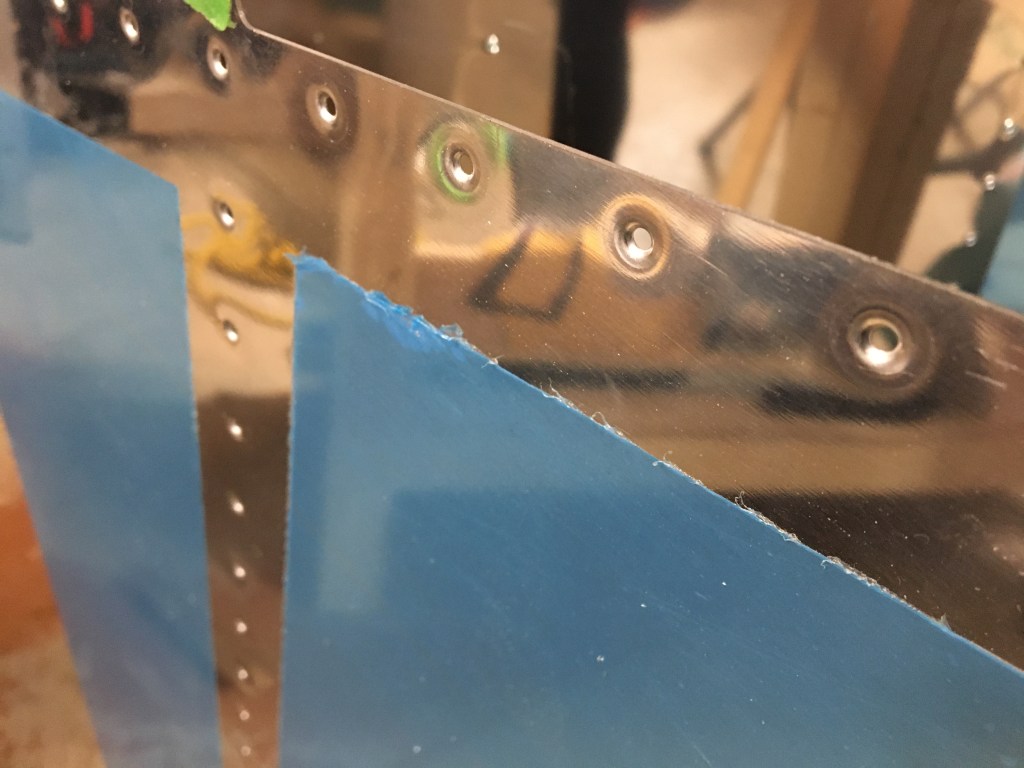
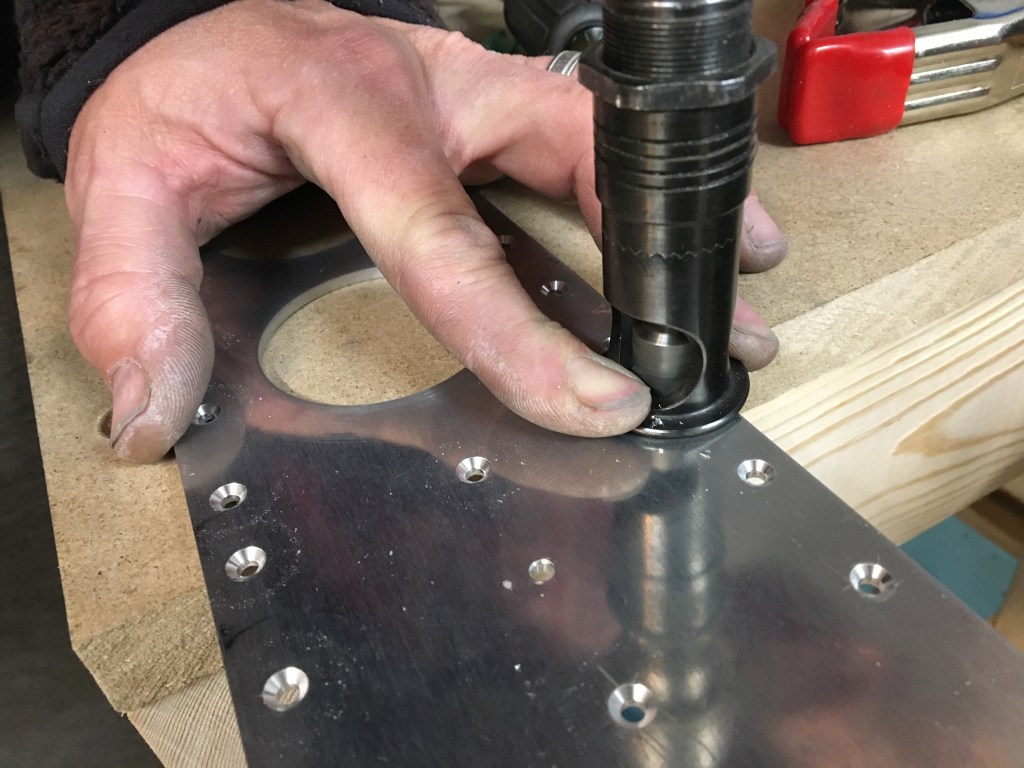
After every hole has been properly sized, if that hole requires a flush rivet (a rivet that is flat to the surface), the hole must be either countersunk or dimpled. Countersinking involves drilling out a recessed area for the rivet to sit. If the material is too thin to countersink, dimpling is deforming the metal to the same shape of the countersink, so that the two pieces of metal can be nested together. Flush rivets are used for all aerodynamic surfaces. Universal or dome rivets do not need to be countersunk or dimpled and are used on surfaces that aren’t important to air flow.
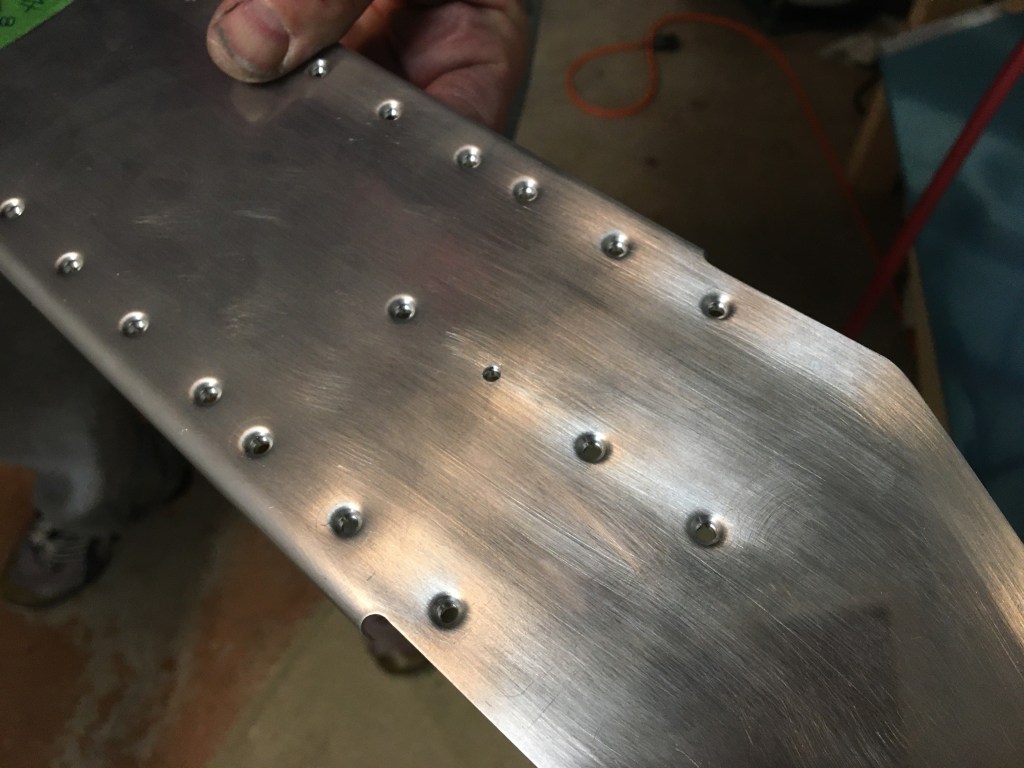
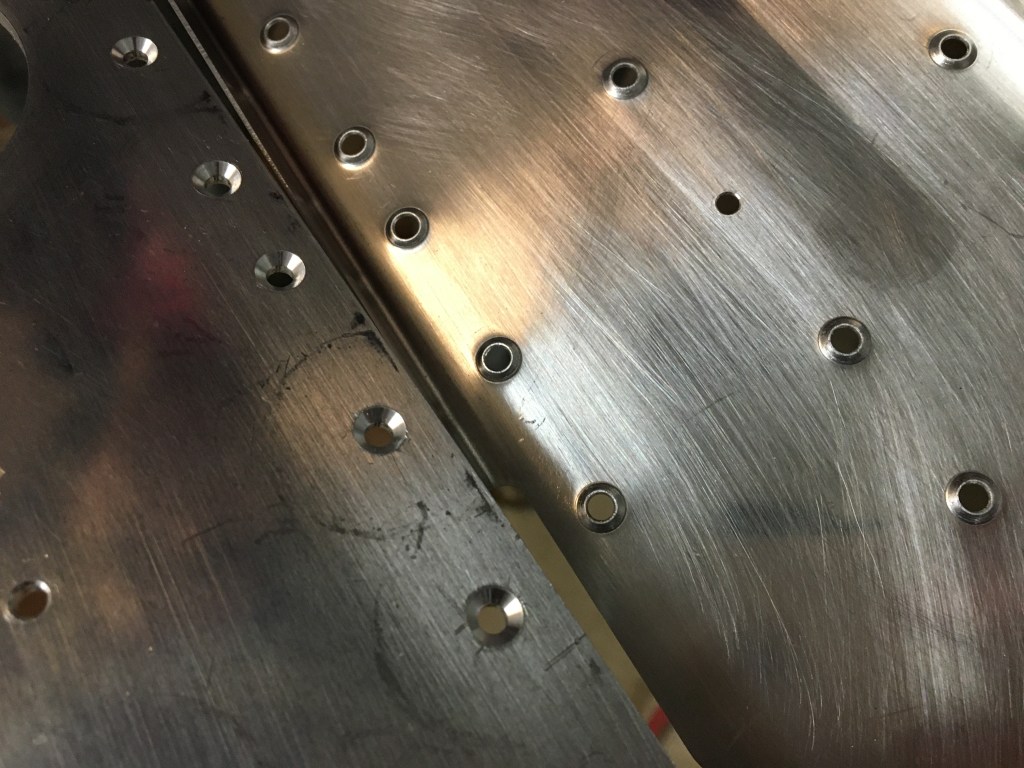
And we’re not even at the part of putting in the rivets yet.
To be continued…
 From The Right Seat
This looks like so much fun.. If only I had a garage….
LikeLiked by 1 person